
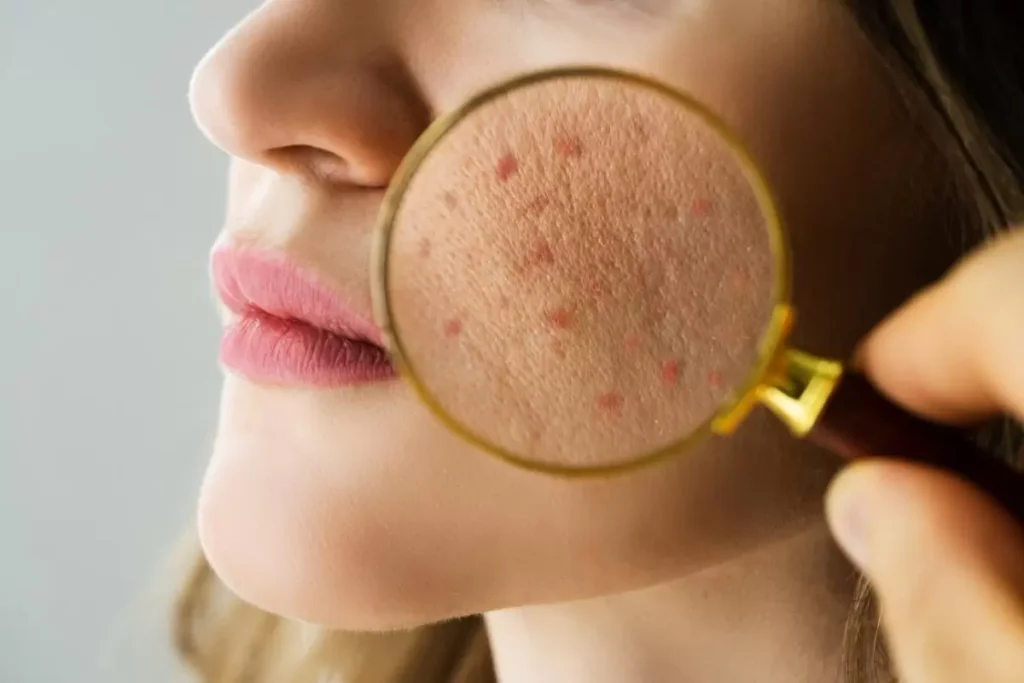
Identifying the root cause of acne leads to a lasting solution.
Acne is not just a skin problem; it is a chronic dermatological disease triggered by a combination of hormonal, genetic, and environmental factors. Temporary results may be achieved with the use of incorrect products or superficial treatments; however, identifying the underlying cause of acne is essential for lasting improvement. Assoc. Prof. Dr. Demet Akpolat plans a personalized treatment protocol for each patient by individually evaluating their acne type and triggering factors.
What causes acne?
Acne develops when increased sebaceous gland activity, clogged pores, bacterial growth, and inflammation combine. Triggering factors vary from person to person.
- Hormonal fluctuations (menstrual cycle, polycystic ovary syndrome, puberty)
- Genetic predisposition
- Stress and sleep disturbances
- Dietary habits
- Wrong skincare products
- Acne caused by medication
Which treatments are available?
Acne treatment is not based on a single method, but on a personalized protocol tailored to the type and severity of acne and the patient’s overall health.
Topical Treatments For mild to moderate acne, topical treatment is planned using creams containing retinoids, benzoyl peroxide, azelaic acid, or antibiotics.
Systemic Treatments For moderate to severe acne, oral antibiotics or systemic medications such as isotretinoin may be necessary. Treatment is managed through close monitoring.
Chemical Peeling It is applied as a complementary treatment to reduce pore congestion, accelerate skin renewal, and prevent the formation of acne scars.
Laser Treatment It is used to reduce inflammation, control sebaceous gland activity, and prevent acne scarring in the early stages.
Dermapen It renews skin tissue, minimizing the formation of acne scars and increasing treatment effectiveness.
How does the treatment process work?
- First step: Detailed skin analysis and acne type determination.
- Follow-up: The treatment protocol is updated through regular check-up sessions.
- Duration: Depending on the severity of the acne, it varies between 3-6 months.
- Results: Significant improvement is observed within the first 4-8 weeks; completion of the treatment is important for lasting results.
Frequently Asked Questions
How long does acne treatment take? Treatment typically lasts 3-6 months, although this varies depending on the type and severity of acne. Regular follow-up and control sessions are crucial for maintaining lasting results.
Doesn’t acne go away on its own? Mild acne may sometimes resolve on its own; however, untreated acne carries serious risks in terms of scarring, chronicity, and psychological impact. Early intervention both speeds up healing and prevents scarring.
Is acne treatment possible during pregnancy? Some treatment options are limited during pregnancy. Assoc. Prof. Dr. Demet Akpolat plans safe treatment protocols suitable for pregnancy and breastfeeding on an individual basis.
Does diet affect acne? Yes. High glycemic index foods and dairy products can trigger acne in some patients. Dietary recommendations are also provided during the treatment process.