
Early diagnosis saves lives.
Skin cancer is a disease that is largely treatable when detected early, but can have serious consequences if left untreated. Regular skin examinations and expert check-ups are the most critical steps in catching skin cancer early. Assoc. Prof. Dr. Demet Akpolat provides detailed evaluation of skin lesions through dermatological examination and dermoscopy, enabling early diagnosis and accurate treatment planning.
Types of Skin Cancer
Basal Cell Carcinoma It is the most common type of skin cancer. It usually appears as a pearly or reddish lesion in sun-exposed areas. It grows slowly and can be successfully managed with early treatment.
Squamous Cell Carcinoma It often develops as a result of sun damage. It manifests as crusted, hardened, or ulcerated lesions. Early intervention is critical.
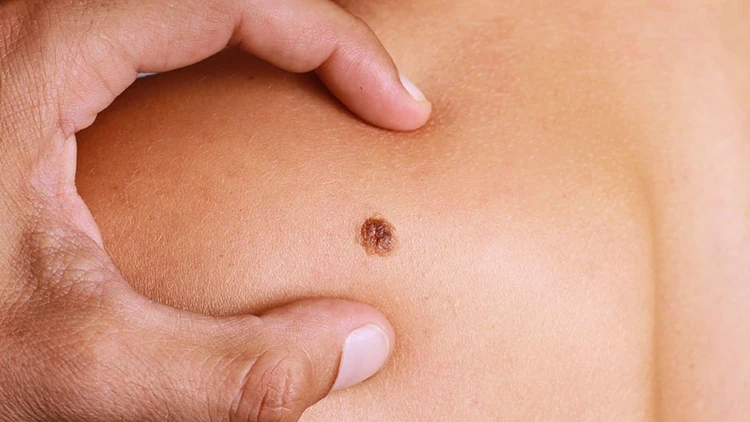
Melanoma It is the most dangerous type of skin cancer. It can appear as a change in an existing mole or as a newly appearing irregular, discolored lesion. With early diagnosis, the success rate of treatment is very high.
What are the risk factors?
- Prolonged and unprotected sun exposure
- Fair skin, light eyes and hair color
- Family history of skin cancer.
- Presence of numerous or atypical moles
- Immune system suppression
- Using a solarium
The ABCDE Rule — Follow Your Moles
Apply the ABCDE rule to recognize early signs of skin cancer:
- A — Asymmetry: If the two halves of Benin are not mirrors of each other
- B — Border: If the edges are irregular, indented, or blurry
- C — Color: If there is more than one color tone or color change
- D — Diameter: If I am larger than 6 mm
- E — Evolving (Change): If it changes in shape, size or color
If you notice any of these symptoms, seek immediate medical attention from a dermatologist.
How does the diagnostic process work?
Dermoscopy Skin lesions are examined in detail using a special magnifying device. Structural changes that are not visible to the naked eye are detected at an early stage.
Biopsy A tissue sample taken from suspicious lesions is examined in a pathology laboratory to make a definitive diagnosis.
Treatment Planning Depending on the diagnosis, surgical excision, cryotherapy, or other treatment methods are planned.
What can you do to protect yourself?
- Apply SPF 50+ sunscreen at least 30 minutes before sun exposure.
- Reapply sunscreen every 2 hours.
- Limit sun exposure during peak sun hours (10:00-16:00).
- Wear a hat, goggles, and protective clothing.
- Avoid tanning beds.
- Get a dermatological check-up at least once a year.
Frequently Asked Questions
Is a skin cancer examination painful? No. Dermoscopy is a completely painless imaging method. If a suspicious lesion is present, a biopsy will be planned, and this procedure will also be performed under local anesthesia.
How often should I get a skin checkup? For individuals without risk factors, an annual check-up is recommended. More frequent check-ups may be planned for those with a family history of skin cancer or those with numerous moles.
Is every mole dangerous? No, not every mole is cancerous. However, it is important that every mole is evaluated by a qualified specialist. Using dermoscopy, suspicious lesions can be accurately distinguished from benign ones, allowing for early diagnosis and appropriate management when necessary.