
What is Stain Treatment?
The density of melanin pigment in our skin determines our skin color. Sun exposure, medications, and pregnancy can lead to a localized increase in melanin density and the formation of spots. After a detailed dermatological examination to determine whether the spots are superficial or deep-seated, it is possible to get rid of them with specific treatment protocols.
In the treatment of blemishes, many treatment methods can be used, such as chemical peeling, enzymatic peeling (Cosmelan – Dermamelan), laser treatment, or mesotherapy.
Chemical peeling
Agents such as glycolic acid and trichloroacetic acid (TCA) are used in varying concentrations depending on the individual’s skin type, the intensity of the blemishes, and the desired skin radiance; superficial, medium, and deep peeling is performed. An average of 4 sessions are conducted at intervals of 3-4 weeks. This method, performed during the winter months, treats not only blemishes but also fine wrinkles.
Enzymatic peeling
The Cosmelan-Dermamelan system enzymatically reduces melanin pigment density in the skin and prevents the formation of new melanin pigment. Cosmelan is used to treat superficial spots, while Dermamelan is used to treat deeper spots. The mask, applied to the face by a specialist doctor in an in-office setting, remains on the face for 8-10 hours. After this time, the patient removes the mask at home and continues treatment with a personalized follow-up kit. Follow-up appointments are scheduled every 1.5-2 months.
Laser treatment
Laser systems used in pigmentation/spot treatment are determined according to the location of the lesion and the type of pigment. The location of these lesions, which target melanin pigment in melanosomes, is important in determining the wavelength of the laser to be used. Pigment-specific Q-switched laser systems are most frequently preferred in spot treatment and are effective for deep-seated spots. CO2 lasers can be used for epidermal, or superficial, spots. Since the target in these lasers is water, they create controlled damage and peeling in the uppermost layer of the skin.
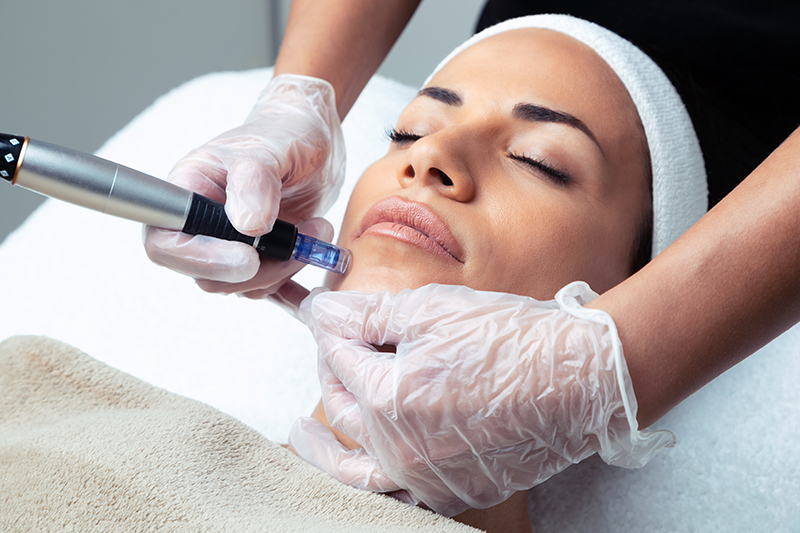
Fractional Radiofrequency (Gold Needle)
What is gold needle therapy?
The aging process, genetic factors, environmental factors, and dietary habits cause structural changes in our skin. Over time, the amount of collagen-elastin fibers and hyaluronic acid in our skin decreases, leading to fine wrinkles, furrows, sagging, and a dull appearance. There are many treatment options to eliminate these changes. One of them is gold needle therapy, which works by sending high-energy radiofrequency under the skin.
How does gold needle therapy work?
Gold needles deliver controlled fractional radiofrequency energy to the deeper layers of the skin in the targeted area, stimulating collagen synthesis beneath the skin’s surface without damaging it. With gold needles, radiofrequency energy is delivered not only to the target tissue but to all skin layers the needle passes through. As the needle approaches the skin surface, the energy is gradual and controlled, minimizing surface damage. Therefore, it can be used even in summer.